Daily Archives: 22 June 2024

AI-Powered Portable Thermal Imaging for Breast Cancer Pre-Screening

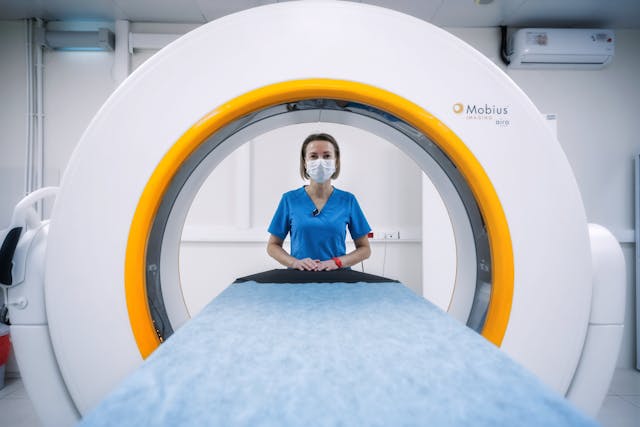
Breast cancer poses significant global health challenges for women, with increasing incidence and mortality rates. Access to mammography screening and diagnosis remains limited, particularly in low- and middle-income countries. This retrospective study evaluated a breast cancer pre-screening solution (BCPS) using a commercially available smartphone with a thermal imaging sensor powered by artificial intelligence. The study aimed to assess the BCPS tool’s performance compared to mammography, the established gold standard for initial breast cancer screening.

Conducted at the Erebouni Medical Center Breast Unit in Armenia over six months, the evaluation involved 478 women, 45 of whom were diagnosed with breast cancer post-biopsy. Participants underwent screening with the BCPS before standard breast screening. Mammography results confirmed malignancy, serving as ground truth for comparison with BCPS AI results.

When combined with patient-reported or clinical symptoms, the BCPS tool achieved 89% sensitivity and 83% specificity compared to mammography. Without clinical or patient-reported symptoms, sensitivity decreased to 60%, while specificity increased to 88.2%.

This study demonstrates that the BCPS tool, leveraging a smartphone-based thermal imaging sensor and AI, aids early breast cancer detection, particularly where mammography is inaccessible. This is not just a technological advancement, but a beacon of hope for low- and middle-income countries, offering a pre-screening option for women who avoid mammography due to various reasons. Further research is warranted to validate these findings and explore additional applications, such as detecting pathological lymph nodes and comparing BCPS with other screening modalities like POCT, MRI, and CEM.

More information: Nerses Berberian et al, Evaluation of an AI-powered Portable Thermal Imaging Solution as a Pre-screening Tool for Breast Cancer, Cancer Screening and Prevention. DOI: 10.14218/CSP.2023.00034S

Journal information: Cancer Screening and Prevention Provided by Xia & He Publishing Inc.

Exploring the Restorative Effects of a Nature Walk on Attention and Cognitive Function

Research conducted by psychology researchers from the University of Utah is adding empirical weight to what American authors John Muir and Henry David Thoreau espoused over a century ago: Spending time in natural surroundings not only nourishes the heart and soul but also benefits cognitive function. Amy McDonnell and David Strayer are at the forefront of this research, which utilises electroencephalography (EEG) to measure participants’ attentional capacity in natural versus urban settings.

Published in Scientific Reports, their study conducted at the university’s Red Butte Garden reveals that a walk in nature enhances executive control processes in the brain beyond the benefits typically associated with exercise alone. This finding contributes significantly to the growing scientific literature on how natural environments positively impact physical and mental health. Reflecting this increasing interest, the University of Utah has established the Nature and Human Health Utah research group to explore these themes further and propose practical solutions.

The researchers suggest that humans have a deep-seated affinity for nature rooted in our evolutionary history—a concept known as biophilia. This innate connection is increasingly threatened by dense urban environments characterised by constant technological stimuli such as cell phones, cars, and computers. According to Strayer, the modern urban jungle contrasts sharply with the therapeutic qualities of natural settings, highlighting a critical need to preserve access to nature for public health.

Strayer, a psychology professor known for his previous work on multitasking and distracted driving, has spent the last decade investigating how nature influences cognitive processes. McDonnell, who conducted the latest research as part of her doctoral dissertation, continues this line of inquiry as a postdoctoral fellow at the University of Utah. Their study, conducted in 2022 at Red Butte Garden, involved 92 participants who underwent EEG recordings before and after a 40-minute walk.

Participants first engaged in a mentally taxing cognitive task—counting backwards from 1,000 by sevens—to deplete their attentional reserves. They were then assigned either a nature walk through Red Butte or an urban walk through the university’s medical campus. The EEG data showed that those who walked in nature exhibited improved executive attention on subsequent tasks compared to those who walked in an urban environment. This improvement in executive control, essential for tasks requiring concentration and problem-solving, underscores the unique cognitive benefits of natural settings.

What distinguishes this study from much of the existing research in the field is its rigorous methodology, particularly its reliance on objective EEG data rather than subjective self-reports. EEG allowed the researchers to precisely map brain activity associated with attentional processes, revealing distinct enhancements in executive control among nature walkers.

McDonnell explained the technical aspects of their approach, detailing how each participant wore a cap fitted with electrodes to capture brain activity. This setup facilitated recording subtle electrical signals across the scalp, providing detailed brain maps highlighting the specific neural mechanisms influenced by environmental exposure.

While the study found significant benefits for executive control, particularly in the prefrontal cortex—an area critical for decision-making and problem-solving—it noted less pronounced effects on alertness and orientation. This specificity suggests that different components of attention may respond differently to environmental stimuli, an area ripe for further investigation.

Looking ahead, McDonnell and Strayer aim to refine their findings to identify which natural settings optimally enhance cognitive function and determine the necessary duration of exposure for maximal benefits. Their ultimate goal is to inform urban planning and design practices that promote mental and physical well-being by incorporating elements of natural environments.

Strayer emphasised the broader implications of their research, highlighting how understanding the cognitive benefits of nature could lead to innovative urban interventions. By integrating nature-inspired elements into urban landscapes, cities could support and enhance public health outcomes, counterbalancing the cognitive stresses imposed by modern urban living.

Continuing their work at Red Butte Garden, the researchers are investigating how cellphone use during walks may influence cognitive responses. Strayer views this ongoing research as complementary to his broader interest in distraction and attention, framing them as interconnected facets of mental functioning. He posits that while urban environments may overload cognitive resources, natural environments offer a refreshing reprieve, allowing the brain to reset and operate more efficiently.

McDonnell and Strayer’s research underscores the profound cognitive benefits of spending time in natural environments, supported by robust EEG evidence. Their findings not only validate the intuitive appeal of nature but also provide scientific insights that could reshape urban planning paradigms, fostering healthier and more resilient communities in an increasingly urbanised world.

More information: Amy S. McDonnell et al, Immersion in nature enhances neural indices of executive attention, Scientific Reports. DOI: 10.1038/s41598-024-52205-1

Journal information: Scientific Reports Provided by The University of Utah
Over 150,000 Deaths Linked to Heatwaves by 2019: First Global Mapping

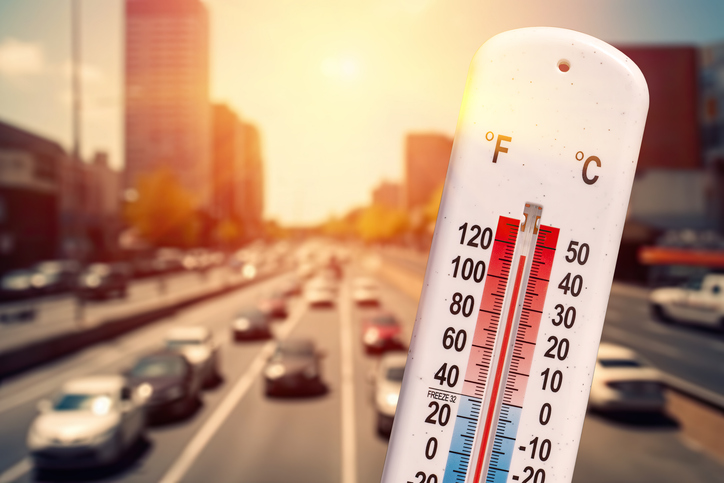
A study led by Monash University has mapped global heatwave-related mortality from 1990 to 2019, revealing over 153,000 additional deaths per warm season, with nearly half occurring in Asia. The research, published in PLOS Medicine and led by Professor Yuming Guo, analysed daily death and temperature data from 750 locations across 43 countries. It found a significant increase in heatwave-related deaths, particularly in Southern and Eastern Europe, polar and alpine regions, and areas with higher incomes.

Comparing temperatures from 1850–1990 to 2013–2022, global surface temperatures have risen by 1.14℃, projected to increase by 0.41-3.41℃ by 2081–2100 due to climate change. This warming trend intensifies heatwaves in frequency, severity, and geographical spread. The study underscores that heatwaves contribute to a mortality burden averaging 236 deaths per ten million residents per warm season.

The study, which collaborated with Shandong University, the London School of Hygiene & Tropical Medicine, and other global institutions, highlights regional disparities in heatwave impacts. Tropical climates and lower-income regions saw a decline in heatwave-related mortality from 1990 to 2019. However, the findings stress the urgent need for tailored adaptation strategies and risk management at all government levels.

Professor Guo emphasises that while previous studies on heatwave-related deaths have been limited in scope, their research provides comprehensive evidence of significant global mortality impacts over the past three decades. Heatwaves induce severe thermal stress on the body, leading to organ dysfunction and heat-related illnesses like heat exhaustion, cramps, and stroke, exacerbating pre-existing chronic conditions and potentially causing premature death and psychiatric disorders.

More information: Qi Zhao et al, Global, regional, and national burden of heatwave-related mortality from 1990 to 2019: A three-stage modelling study, PLoS Medicine. DOI: 10.1371/journal.pmed.1004364

Journal information: PLoS Medicine Provided by Monash University

Understanding Immune Responses: Insights into COVID-19 Resistance among Certain Individuals

Scientists have recently unveiled significant insights into why some individuals avoid COVID-19 despite exposure to the virus. Published in Nature, this groundbreaking study, led by researchers from the Wellcome Sanger Institute, University College London (UCL), and Imperial College London, took a novel approach. Using single-cell sequencing, the study examined immune responses among healthy adult volunteers in the world’s first COVID-19 human challenge study. Unlike previous research focusing on symptomatic patients, this study concentrated on individuals with no prior COVID-19 history, offering a unique opportunity to observe immune responses in an immunologically naïve cohort. Participants were deliberately exposed to SARS-CoV-2 and monitored extensively, with detailed analyses conducted on blood and nasal samples using single-cell sequencing, generating a dataset encompassing over 600,000 individual cells.

Key findings from this study have highlighted previously unidentified immune responses involved in rapid virus detection and clearance. Individuals who successfully cleared the virus exhibited subtle innate immune responses rather than the typical widespread immune activation observed in severe cases. These responses included heightened activity of specific mucosal immune cells in the blood and decreased inflammatory white blood cells. Researchers also identified a gene, HLA-DQA2, crucial in preventing sustained viral infections among participants. Those with higher HLA-DQA2 activity levels before exposure showed enhanced resistance to the virus, establishing a foothold. These findings offer a promising potential for developing targeted therapies and vaccines that mimic these natural protective mechanisms.

In contrast, individuals who developed prolonged SARS-CoV-2 infections exhibited a rapid immune response in the blood but a slower response in the nasal passages, allowing the virus to persist locally. The study also identified common patterns in activated T cell receptors across participants, offering insights into immune cell communication crucial for developing targeted therapies. These insights enhance our understanding of COVID-19 immune responses and pave the way for potential treatments and vaccines that mimic natural protective mechanisms.

Dr Rik Lindeboom from the Netherlands Cancer Institute, a co-first author, underscored the significance of studying immune responses in adults encountering a new pathogen under controlled conditions. This approach enabled researchers to dissect immune responses without confounding factors like comorbidities or varied infection times. Dr Marko Nikolić, senior author from UCL and honorary consultant in respiratory medicine, highlighted the study’s contribution to elucidating early events determining virus clearance or establishment. The findings provide a comprehensive view of immune responses, which could inform the development of therapies targeting not only COVID-19 but other infectious diseases as well.

Dr Sarah Teichmann, senior author and co-founder of the Human Cell Atlas, highlighted the study’s relevance to mapping critical immune cells essential for combating infections. Integrated with ongoing Human Cell Atlas efforts, this knowledge promises to illuminate how different individuals respond to pathogens and vaccines. Shobana Balasingam from Wellcome’s Infectious Disease team noted the study’s importance in advancing our understanding of COVID-19 responses, particularly in differentiating natural and vaccine-induced immune reactions. The findings underscore the need for expanding such studies to diverse settings to develop tailored therapeutics and vaccines suitable for global populations, particularly those in low-resource environments where infectious diseases are endemic.

This study deepens our understanding of immune responses critical in COVID-19 prevention and lays the groundwork for future research into infectious disease dynamics and immune system interactions.

More information: Rik G. H. Lindeboom et al, Human SARS-CoV-2 challenge uncovers local and systemic response dynamics, Nature. DOI: 10.1038/s41586-024-07575-x

Journal information: Nature Provided by Wellcome Sanger Institute