Daily Archives: 20 June 2024

Comprehending Cardiac Dysfunction: A Deeper Look into Heart Issues

Recent research has unveiled a significant discovery in the field of heart health. It has been found that heart failure induces lasting physiological stress, potentially contributing to recurrent health issues. This is not just a temporary effect, but a ‘stress memory’ phenomenon that persists in hematopoietic stem cells, the cells responsible for blood and immune cell production, particularly macrophages crucial for heart health. During heart failure, the DNA modifications of these stem cells are altered, affecting the transformative growth factor beta (TGF-β) pathway. Suppressed TGF-β levels hinder macrophage production, exacerbating heart failure and associated complications. The implications of this ‘stress memory’ are profound, offering a promising strategy for mitigating recurrent heart failure, with potential applications in the early detection of stress accumulation.

Global efforts towards sustainable development goals, including improved health and well-being, yield positive outcomes, with life expectancy projected to rise by approximately 4.5 years by 2050. Public health initiatives have significantly reduced disease incidence and mortality rates, particularly for cardiovascular diseases. Despite these advances, heart disease remains the world’s leading cause of death, affecting an estimated 26 million people through conditions like heart failure.

Researchers in Japan have focused on understanding the mechanisms underlying heart failure recurrence and associated organ deterioration. Their investigations suggest that stress accumulated during heart failure, specifically in hematopoietic stem cells, may play a pivotal role. Project Professor Katsuhito Fujiu from the University of Tokyo’s Graduate School of Medicine highlights the role of these stem cells in the bone marrow and responsible for immune cell production. Studies in mice with heart failure reveal epigenetic changes in DNA, including suppression of the TGF-β pathway in hematopoietic stem cells, leading to dysfunctional immune cell production.

This stress-induced ‘memory’ persists over time, as demonstrated by experiments in which bone marrow transplanted from mice with heart failure perpetuated dysfunctional immune cell production and increased susceptibility to heart failure and organ damage in recipient mice. Fujiu describes this phenomenon as ‘stress memory’, wherein the effects of heart failure stress continue to influence the body long after the initial episode, potentially exacerbating future health challenges.

Excitingly, the identification of these epigenetic changes in the TGF-β pathway has opened new avenues for therapeutic interventions. Project Professor Katsuhito Fujiu from the University of Tokyo’s Graduate School of Medicine suggests innovative treatments that could potentially revolutionize the management of heart failure. These treatments aim to prevent stress memory accumulation during heart failure hospitalization, such as supplementing active TGF-β to restore normal signalling and correcting the epigenome of hematopoietic stem cells. These strategies hold the promise of not only preventing recurrent heart failure but also intercepting its development before significant symptoms arise, offering a beacon of hope for the future of heart health.

The research team aims to develop diagnostic tools capable of detecting and mitigating stress memory in human patients. Their ultimate goal is to enhance early intervention strategies, transforming the management of heart failure by addressing underlying physiological stressors before they manifest clinically.

More information: Yukiteru Nakayama et al, Heart failure promotes multimorbidity through innate immune memory, Science Immunology. DOI: 10.1126/sciimmunol.ade3814

Journal information: Science Immunology Provided by The University of Tokyo

UC Irvine Study Reveals Heat Waves’ Harmful Effects on Vital Organs

Researchers from the University of California, Irvine, have uncovered the molecular origins of heat stress’s detrimental impact on the gut, liver, and brain in elderly individuals. These findings highlight the prospect of developing targeted prognostic and therapeutic strategies. The interconnectedness of these organs forms a complex communication network that spans from the gastrointestinal system to the nervous system. Understanding this gut-liver-brain axis is critical for safeguarding human health, as it influences various physiological processes such as appetite regulation and mental health.

Published in Scientific Reports, a Nature Portfolio journal, their study on mouse models represents a pioneering effort to elucidate the molecular mechanisms underlying heat stress’s effects on this vital biological dialogue. Saurabh Chatterjee, corresponding author and professor of environmental and occupational health at UC Irvine’s Program in Public Health, underscores the impact of inflammation on cognitive decline and age-related diseases. He explains, “Investigating how heat stress disrupts gut-liver-brain communication enables us to better protect our increasingly vulnerable aging population.”

Employing RNA analysis and bioinformatics, Chatterjee and his team identified heat stress-induced changes in gene expression in the brain and liver of elderly mice. Notably, they observed a significant increase in ORM2 production—a liver-derived protein—in heat-stressed mice compared to unstressed controls. This finding suggests organ dysfunction induced by heat stress. The researchers hypothesize that elevated ORM2 secretion may be a compensatory response linked to gut inflammation and dysfunction.

Moreover, the potential impact of ORM2 on brain function through a compromised blood-brain barrier underscores the intricate interplay between multiple organs. This finding not only deepens our understanding of the molecular mechanisms of heat-related health challenges but also opens up new avenues for future research and therapeutic developments. The study also highlights ORM2’s potential as a biomarker for targeted interventions, offering a glimmer of hope in mitigating liver disease exacerbated by heat exposure.

Chatterjee underscores the urgency of their findings, stating, “Our discoveries are not just academic, they have immediate practical implications. With climate change contributing to escalating temperatures and recurrent heat waves, our aging population faces increasing risks of acute and chronic heat stress, threatening their health. The time to act is now.” In conclusion, the UC Irvine study not only sheds light on the molecular underpinnings of heat stress’s impact on vital organs but also offers a foundation for innovative approaches to mitigate its adverse effects on health, particularly in older adults.

More information: Subhajit Roy et al, Periodic heat waves-induced neuronal etiology in the elderly is mediated by gut-liver-brain axis: a transcriptome profiling approach, Scientific Reports. DOI: 10.1038/s41598-024-60664-9

Journal information: Scientific Reports Provided by University of California, Irvine

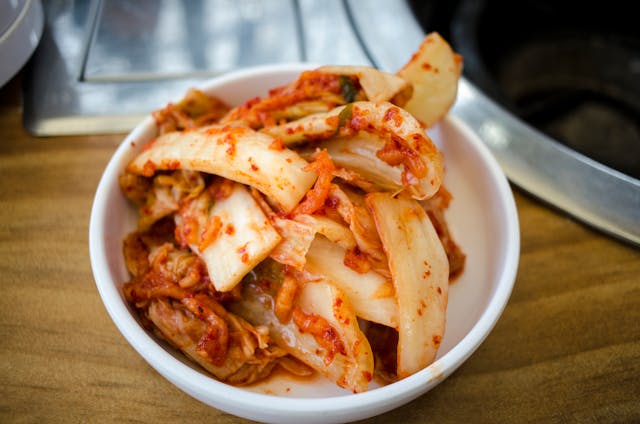
Unlock the Secret to Better Kimchi with Ancient Techniques

Fermented foods like kimchi have been integral to Korean cuisine for thousands of years. Since ancient times, Korean chefs have used onggi — traditional handmade clay jars — to ferment kimchi. Today, most kimchi is made through mass fermentation in glass, steel, or plastic containers, but it has long been claimed that the highest quality kimchi is fermented in onggi. Kimchi purists now have scientific validation, thanks to recent research from David Hu, professor in the George W. Woodruff School of Mechanical Engineering at Georgia Tech, and Soohwan Kim, a second-year PhD student in Hu’s lab.

In a combined experimental and theoretical study, Hu and Kim measured carbon dioxide levels in onggi during kimchi fermentation. They developed a mathematical model to show how the gas was generated and moved through the onggi’s porous walls. By bringing the study of fluid mechanics to bear on an ancient technology, their research highlights the work of artisans. It provides the missing link for how traditional earthenware allows for high-quality kimchi. Their study was published in the Journal of the Royal Society Interface. “We wanted to find the ‘secret sauce’ for how onggi makes kimchi taste so good,” Hu said. “So, we measured how the gases evolved while kimchi fermented inside the onggi — something no one had done before.”

The porous structure of these earthenware vessels mimics the loose soil where lactic acid bacteria — known for their healthy probiotic nature — are found. While previous studies have shown that kimchi fermented in onggi has more lactic acid bacteria, no one knows exactly how the phenomenon is connected to the unique material properties of the container. First, Kim obtained a traditional, handmade onggi jar from an artisan in his hometown of Jeju, South Korea, a region famous for onggi. Back at Georgia Tech, Hu and Kim first tested the permeability of the onggi by observing how water evaporated through the container over time.

Next, they installed carbon dioxide and pressure sensors into the onggi and a typical, hermetically sealed glass jar. They prepared their own salted cabbage and placed it in both containers. They then used the sensors to measure and compare the change in carbon dioxide — a signature of fermentation. Hu and Kim also developed a mathematical model based on the porosity of the onggi. The model allowed them to infer the generation rate of carbon dioxide since the onggi lets carbon dioxide out gradually. They concluded that the onggi’s porous walls permitted the carbon dioxide to escape the container, accelerating the fermentation speed.

The onggi’s porosity also functioned as a “safety valve,” resulting in a slower increase in carbon dioxide levels than the glass jar while blocking the entry of external particles. Their data revealed that the carbon dioxide level in onggi was less than half of that in glass containers. They also found that the beneficial bacteria in the onggi-made kimchi increased 26% more than in the glass counterpart. In the glass jar, the lactic acid bacteria became suffocated by their carbon dioxide in the closed glass container. It turns out that because the onggi releases carbon dioxide at a small rate, the lactic acid bacteria are happier and reproduce more.

“Onggi were designed without modern knowledge of chemistry, microbiology, or fluid mechanics, but they work remarkably well,” Kim said. “It’s very interesting to get these new insights into ancient technology through the lens of fluid dynamics.” Onggi’s semi-porous nature is unique compared to other forms of earthenware. A clay container that leaks, but only slightly, is not easy to make. Terra cotta containers, for example, quickly leak water. “It’s amazing that, for thousands of years, people have been building these special containers out of dirt, but in many ways, they are very high-tech,” Hu said. “We discovered that the right amount of porosity enables kimchi to ferment faster, and these onggi provide that.”

While the use of onggi by artisans is dwindling, the research by Hu and Kim serves as a reminder of the value of these traditional methods. The study’s findings not only validate the artisan work but also inspire the development of energy-efficient methods for fermenting and storing foods. Moreover, the aesthetic appeal of onggi adds to their allure, making them a unique and beautiful addition to any kitchen.

More information: Soohwan Kim et al, Onggi’s permeability to carbon dioxide accelerates kimchi fermentation, Journal of The Royal Society Interface. DOI: 10.1098/rsif.2023.0034

Journal information: Journal of The Royal Society Interface Provided by Georgia Institute of Technology