A survey to chart the occurrence of bilateral hearing impairment across the United States at both the state and county levels has unveiled that the incidence of hearing loss is notably higher among men, non-Hispanic Whites, and individuals residing in rural locales. Bilateral hearing loss refers to the condition of impaired hearing in both ears.
States like West Virginia, Alaska, Wyoming, Oklahoma, and Arizona were identified as having the most significant rates of hearing impairment. In contrast, the District of Columbia, New Jersey, New York, Maryland, and Connecticut reported the lowest rates.
The study highlighted occupations associated with hearing loss, including, but not limited to, the mining sector, extending to roles within retail and dining establishments. Additionally, the research indicated a marked rise in hearing loss incidences from age 35.
In The Lancet Regional Health – Americas, the underlying research for the map’s creation presents an insightful glance into the prevalence of hearing loss across the nation.
The Sound Check study, spearheaded by the NORC team at the University of Chicago and sponsored by the Centers for Disease Control and Prevention, revealed that approximately 38 million Americans, equating to more than one in nine individuals, are affected by some degree of bilateral hearing impairment. This rate escalates to nearly one in seven amongst those aged 35 and above and drastically increases to about one in every 1.4 individuals for those aged 75 and older.
David Rein, a senior fellow at NORC at the University of Chicago and the study’s lead researcher, emphasized the significance of hearing loss as a pressing national issue. He pointed out that ageing is the foremost risk factor for hearing loss. Yet, the findings also suggest that one’s living environment is critical in influencing one’s hearing capabilities. Intriguingly, urban dwellers in densely populated and noisy cities exhibit a lower hearing loss prevalence than their rural counterparts.
Fortunately, the study also highlights the potential for preventing or mitigating noise-induced hearing loss through the use of protective measures. In instances where significant hearing impairment does occur, solutions like hearing aids and other interventions can significantly enhance individuals’ quality of life.
Highlighting the importance of hearing health, Donna Smiley, Ph.D., CCC-A, the chief staff officer for Audiology at the American Speech-Language-Hearing Association (ASHA), equates hearing to clear vision. She advocates for regular hearing screenings and protective measures against noise exposure.
The Sound Check study’s findings, offering detailed estimates of hearing loss by state and county, aim to guide targeted strategies for preventing, diagnosing, and treating hearing loss.
Karl White, director of the National Center for Hearing Assessment and Management at Utah State University, hopes that public health officials nationwide will heighten their advocacy for improved adult screening protocols akin to those for newborns and young children. This study, alongside its accompanying map, underscores the pressing need for attention to hearing loss and its preventability.
Rural residents face a heightened risk of hearing loss due to exposure to noise from outdoor labour involving heavy machinery and recreational activities involving all-terrain vehicles or firearms. Adopting consistent hearing protection measures can significantly reduce this risk, even among those engaging in recreational shooting.
Hearing loss affects communication abilities and has profound implications on emotional, social, and cognitive well-being. It can hinder speech and language development in children, elevate family stress, and lead to challenges in work and social settings among adults. For the elderly, it is linked with an increased risk of dementia, depression, falls, heart attacks, and premature death.
Despite its widespread prevalence, hearing loss in the U.S. remains untreated mainly due to various factors, including limited access to healthcare services, the absence of comprehensive insurance coverage for hearing aids, stigmatization around their use, and a general lack of awareness and understanding about hearing loss.
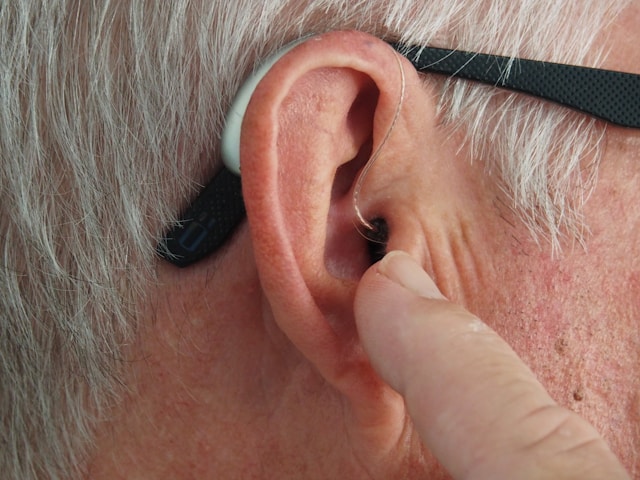
Amplification devices such as hearing aids and cochlear implants can mitigate the negative impacts of hearing loss; for those with mild to moderate hearing loss, over-the-counter hearing aids present a viable option. However, accessing hearing specialists and hearing aids remains challenging for many, particularly in rural or economically disadvantaged areas.
Noise exposure stands as the leading preventable cause of hearing loss. Exposure to loud sounds can lead to irreversible hearing damage at any age. Although most hearing loss results from prolonged exposure to loud noises, even a single unprotected exposure to a deafening sound, such as a gunshot, can result in hearing impairment. Nevertheless, noise-induced hearing loss is preventable by avoiding loud noises and using hearing protection.
The Sound Check project’s methodology involved estimating the national prevalence of bilateral hearing loss based on audiological assessments from the National Health and Nutrition Examination Survey (NHANES), with stratification by age, race and ethnicity, and gender. The researchers employed a statistical modelling technique known as small area estimation to infer hearing.
More information: David B. Rein et al, The prevalence of bilateral hearing loss in the United States in 2019: a small area estimation modelling approach for obtaining national, state, and county level estimates by demographic subgroup, The Lancet. DOI: 10.1016/j.lana.2023.100670
Journal information: The Lancet Provided by NORC at the University of Chicago