Thursday, 2 Apr 2026
  • My Feed
  • My Saves
  • History
  • Blog
Living Well Study
  • Blog
  • Ageing Well
  • Brain Health
  • Healthy Diets
  • Physical Wellness
  • Wellness
  • 🔥
  • Wellness
  • older adults
  • Living Well
  • Brain Health
  • public health
  • dementia
  • Ageing Well
  • physical exercise
  • alzheimer disease
  • mental health
Font ResizerAa
Living Well StudyLiving Well Study
  • My Saves
  • My Feed
  • History
Search
  • Pages
    • Home
    • Search Page
  • Personalized
    • Blog
    • My Feed
    • My Saves
    • History
  • Categories
    • Ageing Well
    • Brain Health
    • Healthy Diets
    • Mental Wellness
    • Physical Wellness
    • Wellness
Have an existing account? Sign In
Follow US
© 2022 Foxiz News Network. Ruby Design Company. All Rights Reserved.
Living Well Study > Blog > Wellness > Predicting Long-Term Care Needs in Older Adults Through Body Composition Analysis
Wellness

Predicting Long-Term Care Needs in Older Adults Through Body Composition Analysis

support
Share
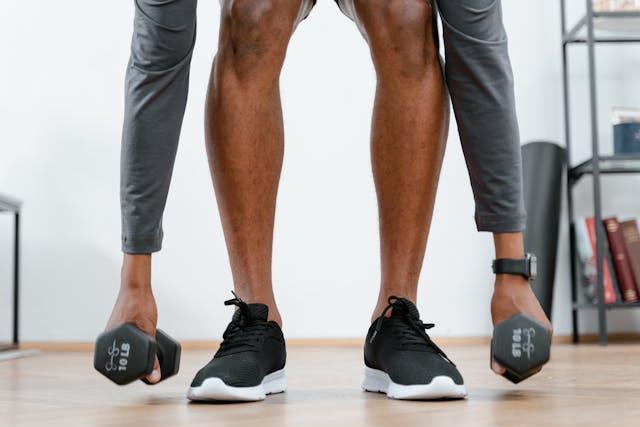
Photo by MART PRODUCTION: https://www.pexels.com/photo/person-exercising-using-dumbbells-8032970/
SHARE

As populations worldwide continue to age, the urgency of preventing functional decline and mitigating the future need for long-term care among older adults is becoming increasingly apparent. A straightforward method for evaluating an individual’s physical condition involves using body composition analysers, particularly for assessing muscle mass. However, emerging research has cast doubt on the reliability of muscle mass alone as a predictor of health outcomes, highlighting instead the importance of assessing “muscle quality”—a more nuanced and potentially informative metric.

Body composition analysers transmit a weak alternating electrical current through the body and measure its resistance. By employing currents at multiple frequencies, these devices can provide insight into the physiological state of cell membranes—quantified as the phase angle—as well as the ratio of intracellular water (ICW) to extracellular water (ECW), both of which serve as proxies for tissue integrity and function. Numerous studies have demonstrated that such measures can distinguish between tissues that contribute to muscle contraction and those that do not, effectively offering an index of muscle quality. Since the ability of muscles to contract is vital for performing everyday activities, indicators of muscle quality may correlate more directly with future risk of functional impairment and consequent dependence on long-term care.

In this context, a longitudinal study was conducted using body composition data from 858 adults aged 65 years or older residing in Kasama City, Ibaraki Prefecture, Japan. The researchers focused on two indicators derived from bioelectrical impedance analysis: the phase angle and the extracellular to intracellular water resistance ratio. These individuals were monitored over 12 years to investigate the association between these physiological markers and the eventual need for long-term care services.

The findings revealed a compelling relationship: individuals exhibiting lower values for the phase angle and the ECW/ICW resistance ratio—particularly in the lower limbs—faced a significantly increased risk of becoming dependent on long-term care. This association was most pronounced when these values fell below the cohort median. In contrast, conventional muscle mass measurements did not correlate statistically with the onset of care dependency. These results underscore the limitations of traditional metrics and suggest that indices reflecting muscle quality may be more predictive of future frailty.

To translate these findings into practical application, the researchers established standard reference values for each indicator, estimating thresholds that signify increased risk of dependency within four and ten years, respectively. Such benchmarks serve as valuable tools for early intervention strategies, allowing health professionals and policymakers to identify at-risk individuals and implement preventive measures more effectively.

Importantly, body composition analysers offer several logistical advantages. The assessment process is non-invasive and requires minimal effort from the subject—simply stepping onto the device initiates the measurement—and no specialised personnel are needed to operate the machinery. This ease of use applies well to implementation in diverse settings, including medical clinics, long-term care facilities, and community centres. With widespread adoption, such technology could become an essential component of public health strategies aimed at reducing the incidence of care dependency in older populations, ultimately improving quality of life and reducing the societal burden associated with ageing.

More information: Yujiro Asano et al, Segmental phase angle and the extracellular to intracellular water ratio are associated with functional disability in community-dwelling older adults: A follow-up study of up to 12 years, Nutrition. DOI: 10.1016/j.nut.2025.112709

Journal information: Nutrition Provided by University of Tsukuba

TAGGED:health care costsolder adultsphysical exercise
Share This Article
Email Copy Link Print
Previous Article Mitigating Cognitive Fatigue and Ageing Effects Through Regular Exercise
Next Article Air Pollution Linked to Decline in Brain Health Among Older Adults
Leave a Comment

Leave a Reply Cancel reply

Your email address will not be published. Required fields are marked *

Recent Posts

  • Experts fine-tune genetic maps to trace DNA influences on human traits and disease susceptibility
  • Fall Prevention Clinics: A Smart Investment in Older Adult Health
  • USC research shows early Alzheimer’s brain markers vary across diverse populations
  • Researchers find gut health supplement may help relieve arthritis pain
  • Outages Drive Rise in Emergency Hospital Visits Among Elderly Populations

Tags

adolescents adverse effects ageing populations aging populations air pollution alzheimer disease amyloids anxiety artificial intelligence atopic dermatitis behavioral psychology biomarkers blood pressure body mass index brain cancer cancer research cardiology cardiovascular disease cardiovascular disorders caregivers children climate change effects clinical research coffee cognition cognitive development cognitive disorders cognitive function cognitive neuroscience cohort studies COVID-19 dementia depression diabetes diets discovery research disease control disease intervention disease prevention diseases and disorders environmental health epidemiology foods food science gender studies geriatrics gerontology gut microbiota health and medicine health care health care costs health care delivery heart disease heart failure home care human brain human health hypertension inflammation insomnia life expectancy life sciences longitudinal studies memory disorders menopause mental health metabolic disorders metabolism mortality rates neurodegenerative diseases neurological disorders neurology neuroscience nursing homes nutrients nutrition obesity older adults parkinsons disease physical exercise population studies preventive medicine psychiatric disorders psychological science psychological stress public health research impact risk assessment risk factors risk reduction skin sleep sleep apnea sleep disorders social interaction social research socioeconomics type 2 diabetes weight loss
April 2026
S M T W T F S
 1234
567891011
12131415161718
19202122232425
2627282930  
« Mar    

This website is for information purpose only and is in no way intended to replace the advice, professional medical care, diagnosis or treatment of a doctor, therapist, dietician or nutritionist.

About | Contact | Cookie Policy | Digital Millennium Copyright Act Notice | Disclaimer | Privacy Policy | Terms of Service

You Might Also Like

Wellness

Age-Related Changes in Brain Function and Peripheral Vascular Health

By support
Wellness

Cerebral Haemorrhages Linked to Higher Dementia Risk

By support
Mental Wellness

Study finds retirement’s mental health boost not equally experienced

By support
Wellness

Genetic Analysis Connects Faults in Sugar Digestion with Irritable Bowel Syndrome

By support
Living Well Study
Categories
  • Ageing Well
  • Brain Health
  • Healthy Diets
  • Mental Wellness
  • Physical Wellness
  • Wellness
LivingWellStudy
  • About
  • Contact
  • Cookie Policy
  • Digital Millennium Copyright Act Notice
  • Disclaimer
  • Privacy Policy
  • Terms of Service
Welcome Back!

Sign in to your account

Username or Email Address
Password

Lost your password?