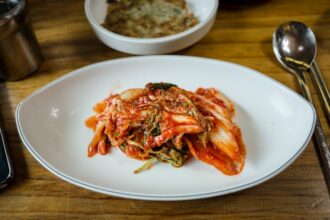


Researchers at the World Institute of Kimchi have successfully isolated lactic acid bacteria (LAB) strains from kimchi that demonstrate high resistance to phages, with these findings stemming from kimchi fermented at low temperatures over extended periods. The team has also elucidated the defence mechanisms employed by these LAB strains against phages, viruses that infect and replicate within bacteria. Kimchi, a staple in Korean cuisine, undergoes lactic acid fermentation in an open, non-sterile environment, contrasting with the sterile, closed systems used for dairy products. This process allows for the spontaneous activation of diverse microorganisms from the raw ingredients, resulting in various LAB species influencing the fermentation, with dominant strains and their durations varying by environmental conditions.
In a detailed investigation into the genetics of LAB in long-term fermented kimchi stored at low temperatures, the research team collected 34 samples from across South Korea, all fermented for over six months at temperatures ranging from -2°C to 10°C. It was discovered that in more than 88% of these samples, Pediococcus inopinatus was the dominant LAB species. Advanced whole-genome sequencing revealed that P. inopinatus has a highly developed clustered regularly interspaced short palindromic repeat (CRISPR) system, a complex adaptive immune system in prokaryotes, consisting of various genes that vary among LAB strains.
Significantly, the P. inopinatus strains possess additional copies of the csa3 gene, which is responsible for encoding the transcription factors of the cas genes that are crucial for the operation of the CRISPR system. The active expression of these genes enables P. inopinatus strains to store extensive genetic data about phages, providing a robust defence against subsequent infections after an initial phage attack. This capability is not only vital for the kimchi industry, which often utilizes LAB strains as starters to produce standardized kimchi with enhanced sensory qualities, but also holds global relevance. Amidst global viral threats like COVID-19, these starter cultures are similarly vulnerable to phage infections, underscoring the need for the development of phage-resistant LAB strains.
Dr. Hae Choon Chang, President of the World Institute of Kimchi and the corresponding author of the study, underscored the unique and robust CRISPR system of P. inopinatus, which defends against a variety of viral invasions. She also highlighted the ongoing research aimed at exploring the antiviral activities and immune spectrum of P. inopinatus. This research holds the promise of extending the applications of P. inopinatus beyond the food industry into pharmaceutical realms, offering new avenues for bio-defense against viral pathogens. The potential of this study not only enhances our understanding of microbial genetics in food fermentation but also promises potential breakthroughs in bio-defence against viral pathogens, instilling hope for the future.
More information: So Yeong Mun et al, Pediococcus inopinatus with a well-developed CRISPR-Cas system dominates in long-term fermented kimchi, Mukeunji, Food Microbiology. DOI: 10.1016/j.fm.2023.104385
Journal information: Food Microbiology Provided by National Research Council of Science and Technology