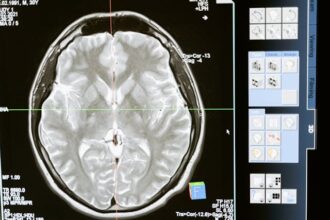


A study suggests that adopting a Mediterranean diet, characterized by its high consumption of fish, vegetables, and olive oil, might offer protection against the accumulation of proteins and brain shrinkage, factors associated with Alzheimer’s disease.
This study focused on the abnormal proteins amyloid and tau. Amyloid proteins tend to form plaques, whereas tau proteins form tangles. Both types of proteins are commonly found in individuals diagnosed with Alzheimer’s disease but can also be present in the brains of older adults who do not show cognitive impairment.
The diet in question promotes a high intake of vegetables, fruits, legumes, cereals, fish, and monounsaturated fats like olive oil. At the same time, it recommends low consumption of saturated fats, dairy products, and meat.
Tommaso Ballarini, PhD, from the German Center for Neurodegenerative Diseases (DZNE) in Bonn, Germany, and the lead author of the study, explained that their findings indicate that a diet rich in unsaturated fats, fish, fruits, and vegetables and low in dairy and red meat may protect the brain from the accumulation of proteins implicated in memory loss and dementia. These conclusions contribute to the growing evidence supporting the impact of dietary habits on memory functions in later life.
The study assessed 512 participants, with 169 being cognitively normal and 343 at an elevated risk of developing Alzheimer’s disease. Participants’ adherence to the Mediterranean diet was evaluated through a questionnaire that queried their consumption of 148 food items in the preceding month. On a scale up to nine, higher scores were awarded to those frequently consuming foods typical of the Mediterranean diet, such as fish, vegetables, and fruit, and seldom eating non-typical foods, such as red meat.
Cognitive functions were tested using a comprehensive set of exams designed to monitor the progression of Alzheimer’s disease, covering various functions, including language, memory, and executive functioning. Brain scans were performed on all participants to measure their brain volume. Additionally, spinal fluid from 226 participants was analyzed for amyloid and tau protein biomarkers.
The research found a link between adherence to the Mediterranean diet and indicators of brain health, including brain volume, cognitive functions, and levels of tau and amyloid proteins in the spinal fluid. After adjusting for variables such as age, gender, and education level, it was observed that lower adherence to the Mediterranean diet correlated with signs of accelerated brain ageing, particularly in brain regions most affected by Alzheimer’s disease. Moreover, individuals with lower adherence to the diet exhibited higher levels of amyloid and tau pathology biomarkers and performed worse on memory tests.
Despite the promising findings, the study acknowledges a limitation in its reliance on self-reported dietary data, which may be subject to inaccuracies. Nevertheless, the research provides valuable insights into how nutritional habits, specifically the Mediterranean diet, might influence the risk of developing Alzheimer’s disease. It suggests that incorporating more elements of this diet could reduce one’s risk. Further investigation is required to understand how the Mediterranean diet benefits brain health.
More information: Tommaso Ballarini et al, Mediterranean Diet, Alzheimer Disease Biomarkers, and Brain Atrophy in Old Age, Neurology. DOI: 10.1212/WNL.0000000000012067
Journal information: Neurology Provided by American Academy of Neurology