

New research from Murdoch University’s School of Allied Health, conducted in collaboration with the Health Futures Institute, has found that wearing blood flow restriction cuffs can alter the way older adults walk, potentially increasing unsteadiness during exercise. The findings highlight essential safety considerations as this form of training becomes increasingly widespread among ageing populations seeking to improve strength and mobility through low-load exercise.
Blood flow restriction (BFR) training has gained global popularity as a way to increase muscle strength using lighter physical loads. The technique involves placing inflatable cuffs around the arms or legs to restrict blood flow during movement or exercise partially. This approach allows individuals to achieve strength benefits without the heavier resistance often required in traditional training methods, which can be challenging for some older adults.
By limiting the flow of blood into and out of a limb, BFR creates a low-oxygen environment within the working muscles. This causes the muscles to fatigue more quickly and work harder, even at lower intensities. As a result, improvements in strength and muscle size can be achieved with less mechanical stress on joints, making the method appealing in rehabilitation and ageing-related exercise settings.
Associate Professor Brendan Scott from the Centre for Healthy Ageing explained that while restricting blood flow to the legs during walking has been shown to improve muscle strength and size, caution is required. He noted that although BFR can be a powerful tool for enhancing stability and functional ability in older adults, research shows that wearing cuffs. At the same time, walking alters gait patterns, suggesting that exercise should be conducted in a safe, controlled environment.
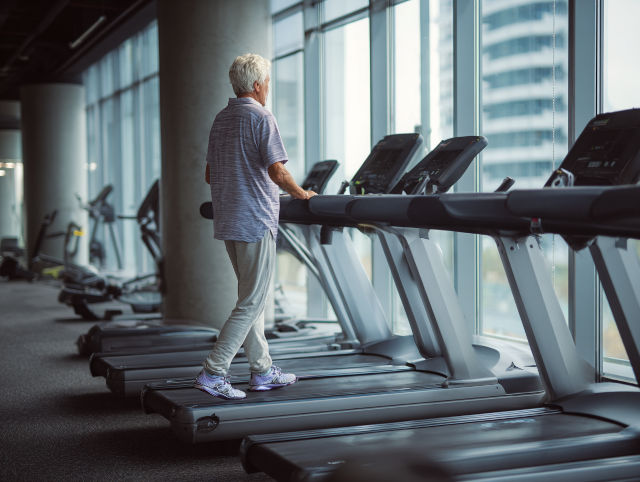
The study involved 10 healthy adults, with an average age of 73, who walked on a treadmill for 10 minutes at different speeds. Participants completed trials without cuffs, then with cuffs inflated to 40 and 60 per cent of the pressure required to restrict blood flow fully. A small motion sensor placed on the lower back was used to assess balance and stability during walking.
Results showed that balance worsened whenever the cuffs were inflated, regardless of walking speed, and higher pressures led to greater instability. Despite this, the researchers emphasised that BFR training may still offer long-term benefits if applied correctly. Professional supervision, low starting pressures, and a safe environment can help challenge balance during BFR walking, helping older adults adapt over time while minimising the risk of falls.
More information: Brook Galna et al, Bilateral blood flow restriction of the legs worsens acute walking balance of older adults – a full factorial randomised experiment, Gait & Posture. DOI: 10.1016/j.gaitpost.2025.110022
Journal information: Gait & Posture Provided by Murdoch University