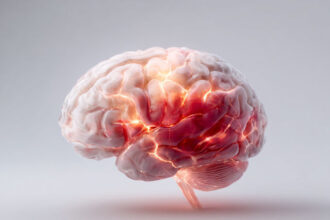


Temporal lobe epilepsy (TLE) is a common and often severe form of epilepsy characterised by recurrent seizures and problems with memory and thinking. Increasing evidence suggests that this condition is linked to the premature ageing of brain cells. A new study from researchers at Georgetown University Medical Center provides compelling evidence that targeting these ageing, or senescent, cells may reduce seizures and improve cognitive function, at least in animal models.
The NIH-funded study, published on 22 December in Annals of Neurology, examined both human brain tissue and a well-established mouse model of TLE. The researchers focused on senescent glial cells, which are support cells that help maintain and protect neurons but do not generate electrical signals themselves. Although glial cells are essential for healthy brain function, when they become senescent, they can contribute to inflammation and tissue dysfunction.
In laboratory analyses of donated human brain tissue, the team examined samples surgically removed from the temporal lobes of people with TLE and compared them with tissue obtained during autopsies from individuals without epilepsy. They found a striking five-fold increase in senescent glial cells in the TLE samples. This suggested that cellular ageing might play a direct role in the development or persistence of seizures in this condition.
Building on these findings, the researchers studied mice that had experienced a brain injury known to trigger TLE. Within just two weeks of the injury, the mice showed clear increases in markers of cellular senescence at both the genetic and protein levels. When the investigators used either genetic techniques or drug treatment to remove senescent cells, the results were notable. Levels of ageing cells were reduced by around 50%, seizure frequency decreased, and the animals’ performance on memory-based maze tests returned to normal. Importantly, about one-third of the treated mice were protected from developing epilepsy altogether.
The drug treatment used in the study combined dasatinib and quercetin. Dasatinib is an FDA-approved targeted therapy used in certain forms of leukaemia. At the same time, quercetin is a naturally occurring plant compound found in foods such as fruits, vegetables, tea, and wine. Together, these compounds have been widely used in animal studies to eliminate senescent cells selectively. Because dasatinib already has a known safety profile in humans and both drugs are being tested in early-stage clinical trials for other conditions, the researchers believe this approach could move more quickly towards human studies.
Senior author Patrick A. Forcelli emphasises the clinical importance of these findings, noting that roughly one-third of people with epilepsy do not achieve seizure control with existing medications. He suggests that senotherapy, which aims to remove senescent cells, could one day reduce the need for invasive brain surgery or improve outcomes for patients who do undergo surgical treatment.
The study also highlights broader implications beyond epilepsy. Senescent glial cells have recently been linked to ageing and neurodegenerative disorders such as Alzheimer’s disease, an area the research team continues to investigate. Ongoing work is exploring additional drugs that target cellular senescence, as well as identifying the most effective time windows for intervention. The researchers hope these efforts will ultimately lead to safer, more effective treatments for people living with epilepsy.
More information: Tahiyana Khan et al, Senescent Cell Clearance Ameliorates Temporal Lobe Epilepsy and Associated Spatial Memory Deficits in Mice, Annals of Neurology. DOI: 10.1002/ana.78118
Journal information: Annals of Neurology Provided by Georgetown University Medical Center