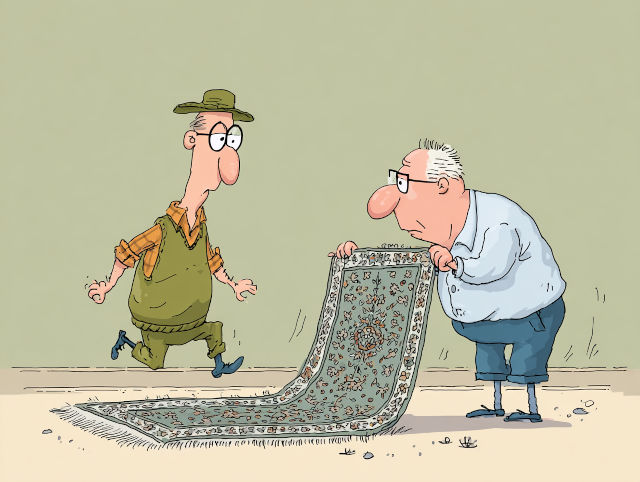
Lena Ting and her colleagues at Emory University have been investigating how the body and brain work together to restore balance when stability is suddenly disrupted, and how this process changes with ageing and neurological disease. Their work focuses in particular on individuals living with Parkinson’s disease, a condition known to affect movement, coordination, and postural control. By examining both neural and muscular responses, the researchers aim to understand better why some individuals struggle more than others to recover from a loss of balance, and how these differences may signal increased risk of falls.
In earlier experiments, Ting’s team demonstrated that when a rug was unexpectedly pulled out from under young, healthy adults, the body responded in a rapid and highly organised manner. First, there was an immediate, involuntary reaction driven by the brainstem and spinal circuits, producing a swift muscular response to prevent a fall. This was followed by a second phase of activity involving higher brain regions, particularly when the balance disturbance was more challenging. This two-stage response suggested that balance recovery relies on both automatic reflexes and more deliberate neural processing, working together to maintain stability under changing conditions.
Building on these findings, the team conducted a new study involving older adults, both with and without Parkinson’s disease, with results published in eNeuro. They found that, even during relatively small balance disturbances, these groups exhibited heightened brain activity alongside increased muscle activation compared to younger individuals. This suggests that maintaining balance requires greater effort and neural engagement in these populations. As Ting explains, when the brain must work harder to stabilise the body, the overall system becomes less efficient, ultimately leading to poorer balance recovery. In addition, the researchers observed a pattern of muscle co-contraction: when one muscle group was activated to restore balance, opposing muscles would simultaneously stiffen. This stiffening response, while perhaps intended to provide stability, was associated with worse balance performance, indicating a less adaptable and more rigid control strategy.
The researchers highlight that their experimental approach may have important clinical applications, particularly in identifying individuals at risk of falls before an incident occurs. By analysing muscle activity following a controlled perturbation—such as pulling a rug away—it may be possible to infer underlying brain activity without directly measuring it. Ting notes that further refinement of this method is needed, but the potential is significant. If clinicians can detect early signs of impaired balance control, they could intervene with targeted balance training or exercise programmes to reduce fall risk. Such preventative strategies are especially important for older adults and those with Parkinson’s disease, where falls can lead to serious injury, loss of independence, and diminished quality of life.
More information: Scott E. Boebinger et al, Cortically Mediated Muscle Responses to Balance Perturbations Increase with Perturbation Magnitude in Older Adults with and without Parkinson’s Disease, eNeuro. DOI: 10.1523/ENEURO.0423-25.2026
Journal information: eNeuro Provided by Society for Neuroscience