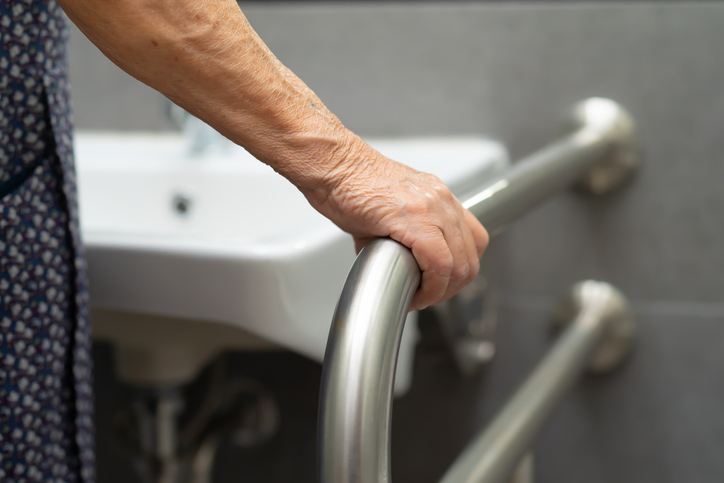
Every 40 seconds, someone in the United States experiences a stroke, during which the brain’s blood supply is interrupted. For those who survive, the resulting brain damage often causes permanent disabilities, transforming simple daily activities like using the bathroom or showering into hazardous tasks. Within a year of leaving the hospital, one in eight stroke survivors pass away. However, a clinical trial spearheaded by Washington University School of Medicine in St. Louis has demonstrated that making specific modifications to the homes of stroke survivors — such as installing grab bars, shower seats, and ramps — significantly lowers their mortality risk in the year following hospital discharge and helps many maintain their independence at home.
“The post-hospital transition is especially precarious for stroke survivors returning home after extended periods in inpatient rehabilitation,” stated lead researcher Susan Stark, PhD, a professor specialising in occupational therapy, neurology, and social work. “Home environments, unlike rehabilitation facilities, are not naturally equipped to accommodate their new needs. We’ve observed that occupational therapy plays a pivotal role in reconfiguring these spaces to support survivors’ independence and safety in their own homes.” This research has been published in the Archives of Physical Medicine and Rehabilitation. In St. Louis, the research team initiated a unique program where occupational therapists visited stroke survivors to spot environmental hazards—like unguarded stairs, low toilets, and poorly lit paths—and to tailor accommodations to meet their specific requirements. The therapists also taught survivors strategies for managing their new limitations, including accessing transportation services suited to their needs.
The recovery trajectory post-stroke is heavily influenced by the severity of the initial blockage and the promptness of medical intervention. Those with mild cognitive and motor impairments usually continue with outpatient rehabilitation after hospital discharge. Conversely, those severely affected are often relocated to skilled nursing facilities for ongoing care. However, another segment of stroke patients, constituting about 25%, presents with moderate impairments and typically moves from hospital to inpatient rehabilitation with prospects for eventual independent living, Stark explained. Life at home poses fresh challenges for these individuals. Simple actions, like pulling a shirt from a drawer or using the bathroom, become significant hurdles due to weakened muscles and compromised balance. Activities like climbing stairs can become formidable, impacting social interactions and emotional well-being.
“Stroke frequently leads to depression,” Stark noted. “Isolation deepens this depression when individuals withdraw from community interaction.” The clinical trial involved 183 participants over 50 transitioning from inpatient rehabilitation to home. They were divided into two groups: one received home modifications and self-management training, while the other was given stroke prevention education during four occupational therapy sessions. The outcomes revealed that eliminating physical barriers and imparting problem-solving skills had life-saving effects. Survival rates were higher in the group that received interventions; 10 participants who only received education passed away during the study, whereas no deaths occurred in the intervention group. Moreover, those with home modifications and self-management training were less likely to need transfer to skilled nursing facilities.
Donna C. Jones, EdD, a member of the intervention group who suffered a stroke in the summer of 2021, benefitted from modifications that facilitated her recovery, boosting her confidence to manage independently while she regained balance and adapted to new routines. “My newly adapted bathroom has become a symbol of hope and a marker of my life’s new direction,” shared Jones, who earned her doctoral degree in ethical leadership and employee development shortly before her stroke. “The practical adjustments and support I received laid the groundwork for a renewed life full of potential.” Jones, who is passionate about event planning, travel, and community volunteering, did not let her stroke or subsequent lower right leg amputation deter her. “Today, I am finding innovative ways to continue my mission of influencing global society through ethical leadership development, teaching, programs, and services. I am immensely thankful for the study that equipped me to face the future with optimism.”
Although the trial was limited to a single geographic area, Stark plans to expand testing of the transition program and conduct an economic analysis to evaluate the cost-effectiveness of home modifications. “The biggest hurdle we face is insurance reimbursement for these modifications,” Stark remarked. “While the interventions are not prohibitively expensive, the current system doesn’t support their costs. If a mere $500 in home modifications can prevent hospital readmissions or extended nursing facility stays, then economically, it’s a clear win. Thus, we are analysing the healthcare savings these interventions could achieve.”
More information: Melissa J. Krauss et al, Community Participation Transition After Stroke (COMPASS) Randomized Controlled Trial: Effect on Adverse Health Events, Archives of Physical Medicine and Rehabilitation. DOI: 10.1016/j.apmr.2024.05.015
Journal information: Archives of Physical Medicine and Rehabilitation Provided by Washington University School of Medicine