


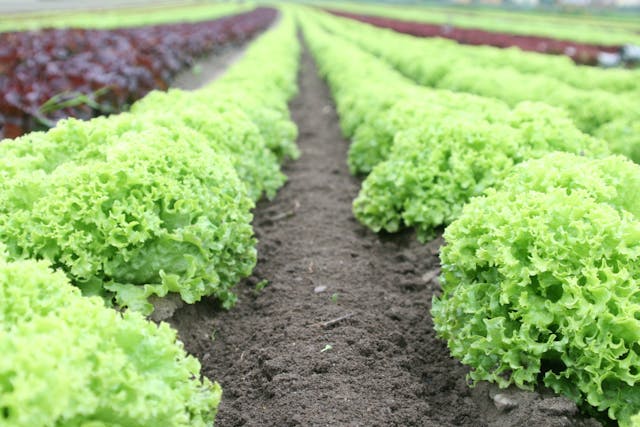
Produce, including lettuce and spinach, routinely undergoes testing for pathogenic bacteria such as Salmonella, Listeria monocytogenes, and pathogenic strains of E. coli, aiming to shield consumers from illness.
Although rapid testing of foods is possible, there remains to be a delay in identifying the source of contamination and the affected individuals. When a multi-state recall is initiated as a remedy, it is often too late for many consumers who have already consumed the contaminated produce. This approach predominantly serves as damage control.
Researchers at the University of Delaware are working on a proactive solution. As described in a publication in the Journal of Food Safety, a collaboration between UD faculty and a Delaware-based startup, Biospection, aims to accelerate the detection process drastically. Harsh Bais, a professor of plant biology, and Kali Kniel, a microbiologist specialising in food safety, along with graduate student Nick Johnson, have teamed up with Andy Ragone of Biospection to detect foodborne pathogens within three to six hours.
Kniel, with expertise in pathogens like Salmonella that can transfer between hosts, stresses the importance of innovative tools for the produce industry to minimise microbial contamination risks. The collaboration between academia and biotechnology firms, such as their own, is poised to enhance technologies that significantly impact food safety and public health.
Pathogens often infiltrate plants, which serve as unwitting hosts, unable to disclose the presence of these microbial invaders. Like humans, plants employ defence mechanisms against diseases. However, specific pathogens have adapted to bypass these defences by settling comfortably within stomata—tiny openings in the plant surfaces.
Bais highlighted that these pathogens are not typical plant pathogens; thus, visual signs of plant stress are not apparent. Biospection technology promises rapid indication of these opportunistic pathogens within plants.
The association between Ragone, a chemical physicist based in Wilmington, and the UD researchers developed through shared scientific resources and community engagements in Delaware. Their collaborative efforts, supported by a research grant from the Delaware Biotechnology Institute Center for Advanced Technology (CAT), have led to the creation of a multispectral imaging platform designed to observe plant responses to pathogens.
This innovative technique, yet to be commercially available, allows for the non-invasive scanning of plants directly on conveyors before they even reach supermarket shelves. By employing multispectral imaging and deep ultraviolet sensing, the technology can detect subtle changes in plants when exposed to harmful pathogens—changes that would be invisible to the naked eye.
For instance, a significant reduction in chlorophyll pigments within a few hours of exposure to Listeria indicates that the plant reacts to an attack, marking a significant shift towards more effective and rapid detection methods.
With funding from a National Science Foundation Small Business Innovation Research grant in 2022, Biospection is developing this technology into a real-time imaging sensor for commercial use, capable of inspecting plants for diseases and other stresses. Ragone envisions a portable, automated device that delivers quick results, revolutionising how we monitor and ensure plant health.
This technology also holds promise for vertical farming, which could greatly benefit from enhanced disease detection methods. Vertical farms use less water and space and are susceptible to diseases such as E. coli, potentially devastating entire harvests. Biospection is actively engaging with agricultural companies to integrate these sensors into vertical farming systems and, potentially, drones for outdoor farming applications.
Looking ahead, Bais is interested in refining the technology to distinguish between different microbes based on the plant’s sentinel response. This breakthrough could redefine microbial identification and plant health monitoring.
In summary, this pioneering approach not only aims to prevent the consumption of contaminated produce but also represents a significant advancement in integrating biotechnology with agricultural practices, ultimately contributing to safer food supply chains and enhanced public health.
More information: Nick Johnson et al, Deep ultraviolet fluorescence sensing with multispectral imaging to detect and monitor food-borne pathogens on the leafy green phyllosphere, Journal of Food Safety. DOI: 10.1111/jfs.13056
Journal information: Journal of Food Safety Provided by University of Delaware