The brain is more mechanically connected to the body than previously understood, according to new research published on 27 April in Nature Neuroscience. Using experiments in mice alongside computational simulations, scientists identified a potential biological explanation for why physical activity is beneficial for brain health. They found that contractions of the abdominal muscles can compress blood vessels linked to the spinal cord and brain, allowing the brain to shift subtly within the skull. This gentle movement appears to encourage the circulation of cerebrospinal fluid around the brain, which may help clear away waste that could otherwise impair neurological function.
Patrick Drew, a professor of engineering science and mechanics, neurosurgery, biology, and biomedical engineering at Penn State, explained that the findings build on earlier work showing how sleep and neuronal loss influence the timing and flow of cerebrospinal fluid. The new study suggests that everyday bodily motion itself plays a direct physiological role in maintaining brain health. According to Drew, even simple movements may contribute to processes that support the brain’s ability to cleanse itself.
“Our research helps explain how ordinary movement can act as a key mechanism for promoting brain health,” Drew noted. He described how abdominal muscle contractions push blood from the abdomen into the spinal cord in a manner similar to a hydraulic system. This action creates pressure that causes the brain to move slightly, which in turn drives fluid flow in and around it. Such fluid movement is thought to be essential for removing metabolic waste and may help reduce the risk of neurodegenerative conditions. The findings suggest that even modest physical activity could play a meaningful role in supporting these processes.
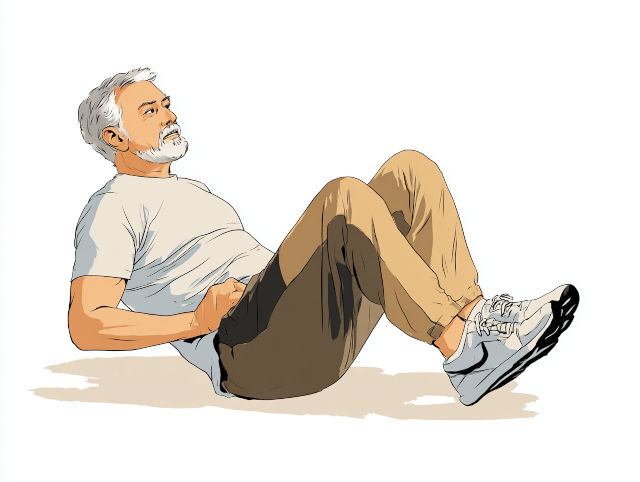
Drew further explained that, much like a pump in a hydraulic system generates pressure to move fluid, the “pump” in this case is the contraction of abdominal muscles. These contractions can be very subtle, such as those that occur before standing up or taking a step. When the muscles tighten, they apply pressure to the vertebral venous plexus—a network of veins connecting the abdomen to the spinal cavity—causing the brain to shift position within the skull.
To observe this mechanism, the research team used advanced imaging techniques in moving mice, including two-photon microscopy for detailed views of living tissue and microcomputed tomography for high-resolution three-dimensional imaging. They detected brain movement occurring just before the animals initiated motion, immediately following the abdominal muscle contractions that precede movement. Additional experiments confirmed the role of abdominal pressure by applying controlled force to the abdomens of lightly anaesthetised mice. Even in the absence of other movement, this localised pressure caused the brain to shift, demonstrating that abdominal contraction alone can drive the effect.
The researchers then turned to computational modelling to better understand how this motion influences fluid flow. Led by Francesco Costanzo, the team developed simplified models treating the brain as a sponge-like structure, allowing them to simulate how fluid moves through its complex spaces. By comparing the process to cleaning a sponge—running water through it while squeezing—they showed how small mechanical movements could help circulate fluid and remove waste. While further research is needed to determine how these findings translate to humans, the study points to a compelling link between everyday movement and the brain’s ability to maintain its own health.
More information: C. Spencer Garborg et al, Brain motion is driven by mechanical coupling with the abdomen, Nature Neuroscience. DOI: 10.1038/s41593-026-02279-z
Journal information: Nature Neuroscience Provided by Penn State