Monday, 18 May 2026
  • My Feed
  • My Saves
  • History
  • Blog
Living Well Study
  • Blog
  • Ageing Well
  • Brain Health
  • Healthy Diets
  • Physical Wellness
  • Wellness
  • 🔥
  • Wellness
  • older adults
  • Living Well
  • Brain Health
  • dementia
  • public health
  • Ageing Well
  • alzheimer disease
  • physical exercise
  • mental health
Font ResizerAa
Living Well StudyLiving Well Study
  • My Saves
  • My Feed
  • History
Search
  • Pages
    • Home
    • Search Page
  • Personalized
    • Blog
    • My Feed
    • My Saves
    • History
  • Categories
    • Ageing Well
    • Brain Health
    • Healthy Diets
    • Mental Wellness
    • Physical Wellness
    • Wellness
Have an existing account? Sign In
Follow US
© 2022 Foxiz News Network. Ruby Design Company. All Rights Reserved.
Living Well Study > Blog > Brain Health > Exercise as a potential intervention for age-related mobility decline
Brain Health

Exercise as a potential intervention for age-related mobility decline

support
Share
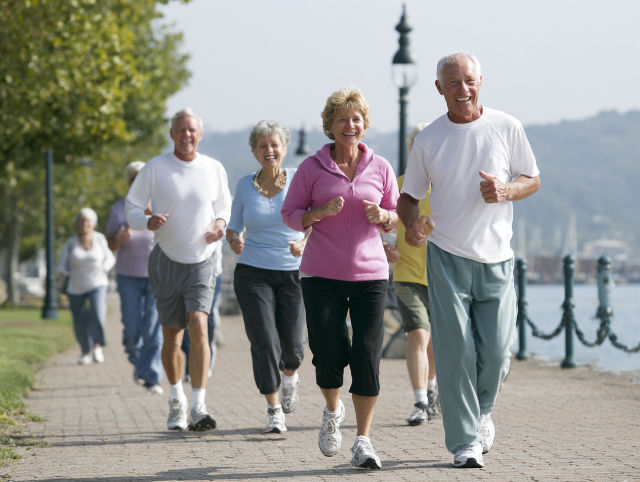
older adults jogging
SHARE

A surge of brain chemicals triggered by running may improve coordination and speed in both younger and older individuals, according to new research in middle-aged mice. The study suggests that aerobic exercise can help restore smooth, agile movement—abilities that often decline with age—by boosting dopamine release in the brain. The findings add to growing evidence that physical activity supports mobility not only in youth but also later in life.

Led by researchers at NYU Langone Health, the investigation examined how aerobic exercise influences dopamine, a neurotransmitter central to movement, motivation, reward, and memory. The team built on earlier work showing that young male mice experienced lasting increases in dopamine release after a month of voluntary wheel running. The new study asked whether a similar response occurs in older animals, whose brains are typically assumed to be less adaptable.

To explore this, the researchers studied twelve-month-old male mice, roughly equivalent to humans in their fifties. After 30 days of access to a running wheel, these middle-aged mice showed dopamine increases that matched or even exceeded those seen in younger animals. This finding challenges the idea that ageing brains lose their ability to respond to the neurochemical benefits of exercise, instead suggesting that key movement-related pathways remain responsive well into midlife.

The changes in brain chemistry translated into clear functional improvements. Compared with age-matched mice that did not exercise, the runners were faster and more agile when descending a pole or navigating an open arena—tasks that assess balance, coordination, and motor control. Significantly, grip strength did not change after the exercise period. This indicates that the gains were driven by improved neural coordination rather than increased muscle strength, highlighting a direct link between brain chemistry and movement quality.

Senior author Margaret Rice, PhD, a professor at NYU Grossman School of Medicine, emphasised that the benefits of exercise are not limited to the young. She noted that sufficient physical activity can still stimulate dopamine release later in life, helping people move more easily and efficiently. This perspective reframes exercise as a meaningful intervention for age-related mobility decline, rather than simply a lifestyle choice.

Aerobic exercise—such as running, swimming, cycling, or dancing—has long been known to support brain health and stimulate dopamine release. However, the biological mechanisms underlying these effects in ageing brains have been poorly understood, particularly given that dopamine-producing neurons gradually decline with age. The new findings, published on 9 December in npj Parkinson’s Disease, help clarify this relationship by directly linking exercise-driven dopamine release to improved motor performance in ageing mice of both sexes.

The results may also have implications for Parkinson’s disease, a condition marked by the loss of dopamine-producing neurons and characterised by tremors, slowed movement, and balance problems. Physical activity has long been observed to ease symptoms, but this study provides neurochemical evidence explaining why exercise can improve movement, mood, and memory. While Rice cautions that human studies are still needed, the work strengthens the case for exercise as a powerful, accessible way to support brain health and mobility across the lifespan.

More information: Guendalina Bastioli et al, Voluntary exercise increases striatal dopamine release and improves motor performance in aging mice, npj Parkinson’s Disease. DOI: 10.1038/s41531-025-01213-7

Journal information: npj Parkinson’s Disease Provided by NYU Langone Health / NYU Grossman School of Medicine

TAGGED:dopaminemotor coordinationolder adultsparkinsons diseasephysical exercise
Share This Article
Email Copy Link Print
Previous Article Age-related energy deficits in midbrain neurons may underlie Parkinson’s disease
Next Article Breaking Down the Complex: A Key Step in the Inhibition of Alzheimer’s Disease
Leave a Comment

Leave a Reply Cancel reply

Your email address will not be published. Required fields are marked *

Recent Posts

  • Spending Time Outdoors Linked to Higher Life Satisfaction
  • Exercise Could Play a Key Role in Helping People Stop Smoking
  • The Tiny Cellular Framework Behind Brain Development
  • ‘Forever Chemicals’ Found in Nearly Entire US Study Population, Researchers Report
  • Healthy Hearts May Still Face the Risk of Alzheimer’s Disease

Tags

adolescents adverse effects ageing populations aging populations air pollution alzheimer disease amyloids anxiety artificial intelligence atopic dermatitis behavioral psychology biomarkers blood pressure body mass index brain cancer cancer research cardiology cardiovascular disease cardiovascular disorders caregivers children climate change effects clinical research coffee cognition cognitive development cognitive disorders cognitive function cognitive neuroscience cohort studies COVID-19 dementia depression diabetes diets discovery research disease control disease intervention disease prevention diseases and disorders environmental health epidemiology foods food science gender studies geriatrics gerontology gut microbiota health and medicine health care health care costs health care delivery heart disease heart failure home care human brain human health hypertension inflammation insomnia life expectancy life sciences longitudinal studies memory disorders menopause mental health metabolic disorders metabolism mortality rates neurodegenerative diseases neurological disorders neurology neuroscience nursing homes nutrients nutrition obesity older adults parkinsons disease physical exercise population studies preventive medicine psychiatric disorders psychological science psychological stress public health research impact risk assessment risk factors risk reduction skin sleep sleep apnea sleep disorders social interaction social research socioeconomics type 2 diabetes weight loss
May 2026
S M T W T F S
 12
3456789
10111213141516
17181920212223
24252627282930
31  
« Apr    

This website is for information purpose only and is in no way intended to replace the advice, professional medical care, diagnosis or treatment of a doctor, therapist, dietician or nutritionist.

About | Contact | Cookie Policy | Digital Millennium Copyright Act Notice | Disclaimer | Privacy Policy | Terms of Service

You Might Also Like

Brain Health

Exploring the Role of Physical Frailty in Dementia Onset

By support
Mental Wellness

Treatment through brain stimulation could enhance the well-being of older adults suffering from depression and anxiety

By support
Brain Health

Clues in urine: protein levels linked to dementia development

By support
Brain Health

Social Inequality Tied to Declining Brain Health in the Elderly and Dementia Cases

By support
Living Well Study
Categories
  • Ageing Well
  • Brain Health
  • Healthy Diets
  • Mental Wellness
  • Physical Wellness
  • Wellness
LivingWellStudy
  • About
  • Contact
  • Cookie Policy
  • Digital Millennium Copyright Act Notice
  • Disclaimer
  • Privacy Policy
  • Terms of Service
Welcome Back!

Sign in to your account

Username or Email Address
Password

Lost your password?