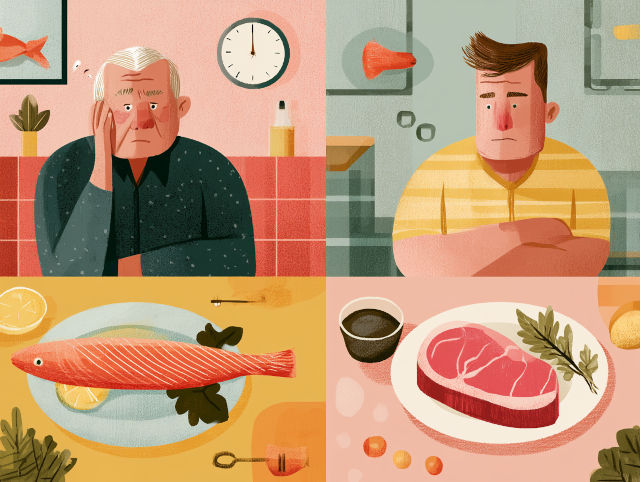
New research from the University of Bristol and the University of Southampton suggests that replacing one beef steak with salmon each week could significantly reduce carbon emissions while also supporting healthier diets. The study, published in the journal Environmental Research: Food Systems, found that the UK’s current meat consumption remains two to three times higher than recommended dietary guidelines. Researchers examined how different dietary changes could influence emissions between 2021 and 2050.
Using data from 4,000 UK households in the Family Food Dataset, the team modelled five dietary scenarios: continuing current eating habits, reducing overall meat and dairy consumption, swapping beef for salmon once a week, following the NHS Eatwell Guide, and adopting the EAT-Lancet Planetary Health Diet. The researchers then estimated the long-term carbon emissions associated with each approach.
If current dietary trends continue, food-related carbon emissions are projected to decline by 15% by 2050, roughly equivalent to the carbon produced by a return flight from London Heathrow to Madrid. However, replacing just one weekly portion of beef steak with UK-sourced salmon nearly doubled the reduction, cutting emissions by 28% over the same period. This saving is comparable to the emissions from a return flight between London Heathrow and Marrakech, Morocco. More substantial dietary changes produced even larger reductions, with lower meat consumption reducing emissions by 39%, the NHS Eatwell diet by 42%, and the Planetary Health Diet by 49%.
Lead author Dr Jenny Baverstock, Honorary Research Fellow at Bristol’s School of Biological Sciences and formerly Principal Enterprise Fellow at the University of Southampton, said simple dietary adjustments could make an important contribution to environmental sustainability. She noted that the salmon-for-beef substitution provides both nutritional and environmental benefits, demonstrating that health and sustainability goals can work together rather than compete against one another.
Globally, food and agriculture account for around 26% of human-caused greenhouse gas emissions, while the UK food system contributes approximately 20%. Animal agriculture alone is responsible for more than 80% of food industry emissions worldwide, with beef, lamb, and pork among the highest-impact protein sources. In contrast, fish, poultry, and legumes offer lower-emission alternatives. Researchers selected beef and salmon because they represent realistic and familiar choices for UK consumers and are largely produced domestically. The study estimated that this single substitution could reduce emissions by 7.3 kilograms of CO2 per person each week.
The researchers acknowledged that changing dietary habits across the population remains challenging and would require balancing the interests of livestock farmers and sustainable fishing industries. Nevertheless, they noted that UK seafood consumption currently falls well below government recommendations, while high consumption of processed and red meat is linked to increased risk of type 2 diabetes. Co-author Professor Guy Poppy from the University of Bristol said growing public concern about planetary health may encourage more people to adopt sustainable dietary choices. He added that current global trade uncertainties and food security concerns could also create opportunities for the UK to strengthen domestic fish production and improve long-term protein security.
More information: Jenny Baverstock et al, Adapting the source of protein in diets to reduce carbon emissions: a UK case study exploring aquaculture, Environmental Research Food Systems. DOI: 10.1088/2976-601X/ae6709
Journal information: Environmental Research Food Systems Provided by University of Bristol